In today’s digital age, cybersecurity is no longer optional for businesses – it’s a necessity. For Western Sydney businesses, the threat is real and growing. Understanding the potential costs, both direct and indirect, is crucial for protecting your livelihood and ensuring long-term success.
This article explores the cybersecurity risks faced by businesses in Western Sydney, revealing the often-hidden costs associated with cyber incidents, and providing a simple framework for assessing your organisation’s vulnerability. Let’s delve into the specifics of how to safeguard your valuable assets.
Is Your Western Sydney Business a Target? The Rising Threat of Cybercrime
Understanding the Current Cybersecurity Landscape in Australia
Australia is experiencing a surge in cybercrime, with small and medium-sized businesses (SMBs) increasingly in the crosshairs. The Australian Cyber Security Centre (ACSC) reports a significant increase in reported incidents, indicating a heightened threat level for businesses across the country. This evolving landscape requires businesses to be proactive and informed about the risks they face. Many factors contribute to this increase, including the growing sophistication of cybercriminals, the increasing reliance on digital technologies, and the vulnerabilities inherent in many business IT systems.
Common Cyber Threats Targeting Small and Medium Businesses (SMBs)
SMBs are susceptible to various cyber threats, each posing unique risks. Phishing attacks, where criminals attempt to steal sensitive information by disguising themselves as legitimate entities, are a common entry point. Ransomware, which encrypts a business’s data and demands payment for its release, can cripple operations. Malware, including viruses and spyware, can compromise systems and steal data. Data breaches, whether intentional or accidental, can expose sensitive customer and business information, leading to significant financial and reputational damage. Distributed Denial-of-Service (DDoS) attacks can overwhelm a business’s online services, making them unavailable to customers. Ensuring you have robust cybersecurity measures is paramount. Understanding these threats is the first step in mitigating them.
Why Western Sydney Businesses are Particularly Vulnerable
Western Sydney businesses are not immune to the national rise in cybercrime and, in some cases, may be even more vulnerable. Many SMBs in the region operate with limited IT budgets and expertise, making them easier targets for attackers. The diverse range of industries in Western Sydney, from construction to healthcare, each face specific cyber risks tailored to their operations and data. Supply chain vulnerabilities can also expose Western Sydney businesses to risk if their partners have inadequate security measures. Furthermore, the rapid growth and development in the region can create opportunities for cybercriminals to exploit vulnerabilities in new or expanding IT systems. Prioritising affordable business IT support and comprehensive security measures is crucial.
Hidden Costs: Beyond the Ransom Payment
Downtime and Lost Productivity: Calculating the Real Impact
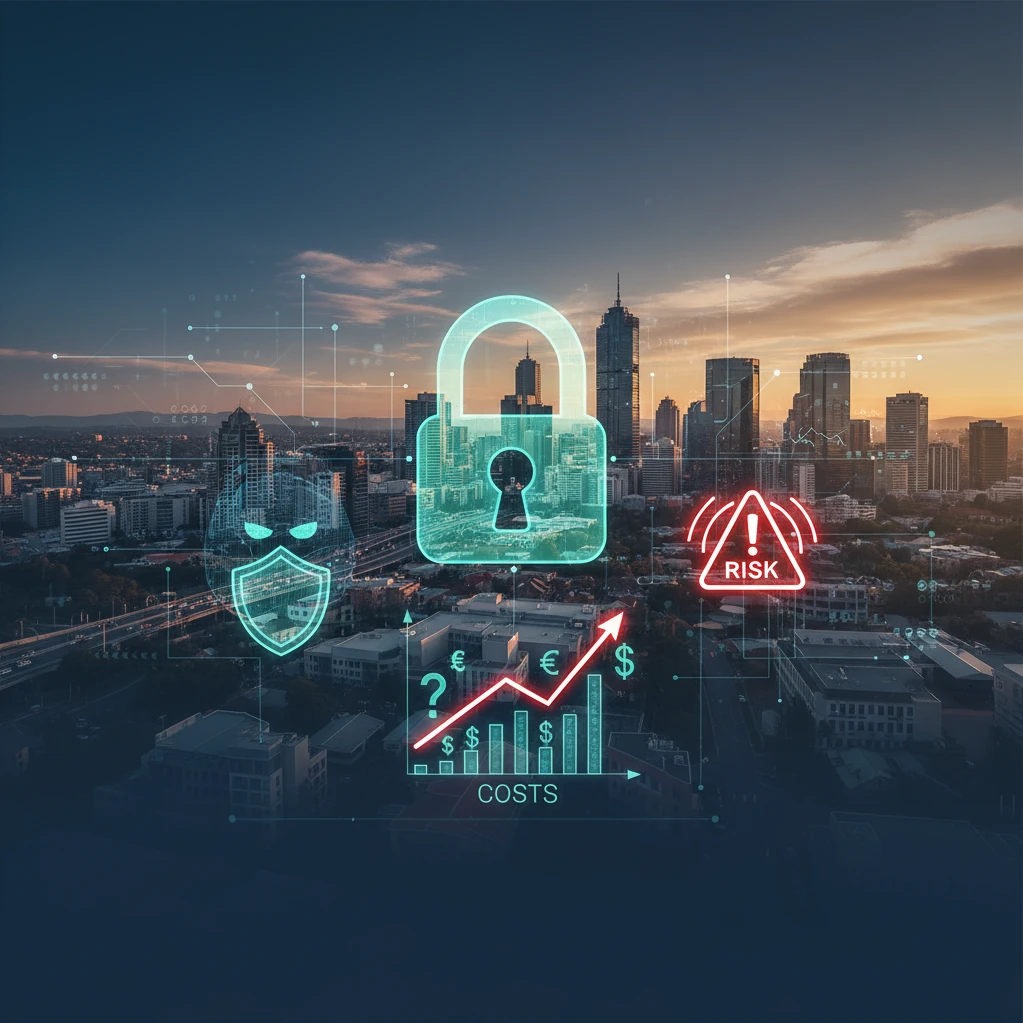
The immediate financial cost of a ransomware payment is just the tip of the iceberg. Downtime, the period when your systems are inaccessible, can have a devastating impact on productivity. Imagine a real estate agency unable to access property listings or a medical practice unable to book appointments. This lost time translates directly into lost revenue. Quantifying this impact requires assessing the hourly cost of downtime, considering factors like employee salaries, missed sales opportunities, and project delays. Businesses should conduct regular downtime simulations to understand their vulnerability and calculate the true cost of system unavailability. Investing in robust backup and disaster recovery solutions can significantly minimise downtime and associated financial losses.
Reputation Damage: Losing Customer Trust and Business
A cyberattack can severely damage your business’s reputation, leading to a loss of customer trust and future business. Customers are increasingly aware of cybersecurity risks and are less likely to trust businesses that have experienced a data breach. The reputational damage can manifest in negative online reviews, social media backlash, and a decline in customer loyalty. Rebuilding trust after a cyber incident requires transparency, proactive communication, and demonstrable improvements in security measures. Implementing a comprehensive cybersecurity awareness training program for employees can also help prevent future incidents and protect your business’s reputation. According to research, it can take months or even years to fully recover from the reputational damage caused by a significant data breach. Reputational damage should be a key input when weighing investments in proactive cybersecurity measures.
Compliance Fines and Legal Fees: Navigating the Regulatory Landscape
Australian businesses are subject to various data protection regulations, including the Privacy Act 1988 and the Notifiable Data Breaches (NDB) scheme. Failure to comply with these regulations can result in significant fines and legal fees. A data breach that exposes personal information can trigger mandatory reporting obligations and potential investigations by the Office of the Australian Information Commissioner (OAIC). Legal fees can arise from defending against lawsuits from affected customers or defending against regulatory action. Ensuring compliance with relevant regulations requires a thorough understanding of your data handling practices and implementing appropriate security controls. Regular audits and assessments can help identify and address compliance gaps, mitigating the risk of fines and legal action. Partnering with a managed IT services provider can provide expertise and support in navigating the complex regulatory landscape.
The Direct Financial Impact of Cybersecurity Incidents: Examples from Western Sydney
Case Study 1: A Local Real Estate Agency Hit by Ransomware
Example: “Smith & Jones Real Estate,” a fictional agency in Parramatta, experienced a ransomware attack that encrypted their property listings and customer database. They were initially asked for a ransom of $10,000. However, the downtime lasted for five days, costing them an estimated $15,000 in lost commissions and productivity. Additionally, the reputational damage led to a 10% decrease in new client acquisition for the following quarter. They also incurred $5,000 in IT recovery costs, bringing the total cost of the incident to $30,000. A robust backup and disaster recovery plan could have significantly reduced the downtime and financial impact.
Case Study 2: A Medical Practice Facing a Data Breach
Example: “Dr. Lee’s Medical Centre,” a hypothetical practice in Blacktown, suffered a data breach when an employee’s laptop was stolen. The laptop contained unencrypted patient records, including sensitive medical information. The practice was required to notify affected patients under the NDB scheme, incurring legal and notification costs of $8,000. They also faced potential fines for non-compliance with privacy regulations. The long-term cost included a loss of patient trust and a decline in new patient registrations. The practice invested in endpoint encryption and cybersecurity training to prevent future incidents. A breach such as this highlights the importance of IT compliance and comprehensive training for staff.
Case Study 3: A Construction Firm Compromised by Phishing
Example: “Build-It Constructions,” a made-up firm in Penrith, fell victim to a phishing attack where an employee inadvertently provided their login credentials to a fraudulent email. The attacker gained access to the company’s bank account and transferred $20,000 to an offshore account. The firm also incurred $3,000 in investigation and recovery costs. The incident highlighted the need for improved cybersecurity awareness training and stronger email security measures. Additionally, they implemented multi-factor authentication (MFA) for all employees to prevent similar incidents in the future. This case underlines the importance of employee training and robust security protocols.
Calculating Your Business’s Cybersecurity Risk Score: A Simple Assessment
Identifying Your Critical Assets: What Needs Protecting?
The first step in assessing your cybersecurity risk is identifying your critical assets. These are the data, systems, and resources that are essential to your business operations. Examples include customer databases, financial records, intellectual property, and critical applications. Consider the impact if each asset were compromised, lost, or unavailable. Prioritise assets based on their value and the potential damage that could result from a security incident. This asset inventory will form the foundation of your risk assessment and guide your security investments. A good starting point is to classify data based on sensitivity (e.g., public, confidential, restricted) and assign ownership to specific individuals or departments.
Assessing Your Existing Security Measures: Where are the Gaps?
Once you’ve identified your critical assets, assess your existing security measures to identify any gaps. This involves evaluating your current security controls, such as firewalls, antivirus software, intrusion detection systems, and access controls. Consider the effectiveness of these controls in protecting your critical assets. Are they up-to-date and properly configured? Are there any known vulnerabilities? Conduct regular vulnerability scans and penetration tests to identify weaknesses in your systems. Assess your security policies and procedures to ensure they are comprehensive and effectively enforced. This assessment will reveal areas where you need to strengthen your security posture. A cybersecurity framework, such as the NIST Cybersecurity Framework, can provide a structured approach to this assessment.
Determining the Likelihood and Impact of Potential Threats
The final step in calculating your cybersecurity risk score is determining the likelihood and impact of potential threats. Consider the various threats that could target your business, such as phishing, ransomware, malware, and data breaches. Assess the likelihood of each threat occurring based on factors like your industry, location, and the effectiveness of your security measures. Evaluate the potential impact of each threat on your business, considering factors like downtime, data loss, reputational damage, and financial losses. Multiply the likelihood by the impact to calculate a risk score for each threat. Prioritise your security investments based on the highest risk scores. For example, a threat with a high likelihood and a high impact should be addressed immediately. Remember that cybersecurity for Western Sydney businesses is an ongoing process that requires constant monitoring and adaptation.
Building Your Cybersecurity Budget: Practical Steps for Western Sydney Businesses
Prioritising Essential Security Measures: Focus on the Fundamentals
Creating a cybersecurity budget shouldn’t be overwhelming. Start by identifying your most critical assets. What data would cause the most damage if compromised? What systems are essential for your business operations? Rank these assets based on their importance and potential impact of a breach. Next, assess your current security posture. Where are your weaknesses? Use a risk assessment framework to identify vulnerabilities. Consider factors like outdated software, weak passwords, lack of employee training, and inadequate firewalls. Prioritise addressing the vulnerabilities that pose the greatest risk to your most critical assets. Focus on implementing essential security measures first, like strong password policies, regular software updates, and basic firewall protection. This “security first” approach provides a solid foundation before investing in more advanced solutions. Don’t fall into the trap of buying expensive tools without addressing fundamental weaknesses. For instance, a state-of-the-art intrusion detection system is less effective if employees are using easily guessable passwords.
Leveraging Government Grants and Incentives: What’s Available?
The Australian government offers various grants and incentives to help small businesses improve their cybersecurity posture. Research available programs through the Australian Cyber Security Centre (ACSC) or your local state government. These programs can provide financial assistance for security audits, software upgrades, or employee training. Applying for these grants can significantly reduce your overall cybersecurity investment. Keep an eye out for announcements of new grants or changes to existing programs. Eligibility criteria and application processes vary, so carefully review the requirements before applying. Some programs may require a matching contribution from your business. In addition, investigate whether your business qualifies for tax deductions related to cybersecurity expenses. Consult with your accountant to understand potential tax benefits. It’s important to ensure your business is eligible for any funding or incentive programs before factoring it into your cybersecurity budget. Government support can make a significant difference in protecting your Western Sydney business.
Considering Managed IT Services: A Cost-Effective Solution?
For many small and medium businesses in Western Sydney, a Managed IT Services provider can be a cost-effective way to manage cybersecurity. Instead of hiring an in-house IT team, you can outsource your IT needs to a team of experts who can provide proactive monitoring, security updates, and incident response. Managed IT services offer predictable monthly costs, allowing for better budget planning. When considering managed services, evaluate the provider’s expertise in cybersecurity. Do they have experience protecting businesses in your industry? What security tools and technologies do they use? What is their incident response plan? Obtain quotes from multiple providers and compare their services and pricing. Factor in the cost of potential downtime and data breaches when evaluating the cost of managed IT services. Investing in proactive IT support can be more affordable than dealing with the consequences of a security incident. Using a managed service such as Digitek IT ensures your Western Sydney business has 24/7 protection.
Key Cybersecurity Investments for Maximum Protection
Investing in Employee Training and Awareness Programs
Employees are often the weakest link in cybersecurity. A well-trained employee can identify and avoid phishing scams, recognise suspicious emails, and follow secure password practices. Investing in regular employee training and awareness programs is crucial for protecting your business. Training should cover topics such as phishing awareness, password security, social engineering, data protection, and incident reporting. Conduct regular training sessions and provide ongoing reminders through newsletters, posters, or short videos. Simulate phishing attacks to test employee awareness and identify areas for improvement. Tailor training to the specific risks faced by your business. For example, if your business handles sensitive customer data, training should focus on data protection regulations and best practices. Make training engaging and interactive to maximize employee participation and knowledge retention. Track employee progress and provide incentives for completing training modules. Ultimately, a culture of security awareness throughout your organization can significantly reduce the risk of cyberattacks.
Implementing Robust Antivirus and Malware Protection
Antivirus software is a foundational security measure that protects your systems from malware, viruses, and other threats. Ensure that all computers, servers, and mobile devices have up-to-date antivirus software installed. Choose a reputable antivirus solution that offers real-time scanning, automatic updates, and advanced threat detection capabilities. Regularly scan your systems for malware and promptly remove any detected threats. In addition to antivirus software, consider implementing other malware protection measures, such as anti-spyware, anti-ransomware, and endpoint detection and response (EDR) solutions. EDR solutions provide advanced threat detection and response capabilities, helping you identify and mitigate threats before they cause damage. Keep your antivirus software and other security tools up-to-date with the latest security patches to protect against newly discovered vulnerabilities. Regularly review your antivirus logs to identify potential security incidents and take appropriate action. Antivirus and malware protection are essential for maintaining a secure computing environment.
Setting Up Regular Data Backups and Disaster Recovery Plans
Data loss can be devastating for a business, whether it’s caused by a cyberattack, hardware failure, or natural disaster. Implementing regular data backups and disaster recovery plans is essential for ensuring business continuity. Regularly back up your critical data to a secure offsite location, such as a cloud storage service or an external hard drive. Automate the backup process to ensure that backups are performed consistently. Test your backups regularly to ensure that they are working correctly and that you can restore your data in the event of a disaster. Develop a disaster recovery plan that outlines the steps you will take to restore your systems and data in the event of a disaster. The plan should include details such as backup locations, recovery procedures, and communication protocols. Regularly review and update your disaster recovery plan to ensure that it is current and effective. Consider using a cloud-based disaster recovery solution to provide fast and reliable recovery in the event of a disaster. Data backups and disaster recovery plans are critical for protecting your business from data loss and ensuring business continuity.
Beyond the Firewall: Layered Security is Essential
Multi-Factor Authentication (MFA): Adding an Extra Layer of Security
Multi-Factor Authentication (MFA) adds an extra layer of security to your accounts by requiring users to provide multiple forms of authentication before granting access. In addition to a password, MFA typically requires users to provide a code from a mobile app, a fingerprint scan, or a security key. Implementing MFA can significantly reduce the risk of unauthorized access to your accounts, even if your password is compromised. Enable MFA for all critical accounts, including email, banking, and cloud storage. Encourage employees to enable MFA on their personal accounts as well. Educate employees about the importance of MFA and how to use it properly. Choose an MFA solution that is easy to use and integrates with your existing systems. Regularly review your MFA settings to ensure that they are properly configured and that all users are enrolled. MFA is a simple but effective security measure that can significantly improve your overall security posture.
Endpoint Detection and Response (EDR): Proactive Threat Detection
Endpoint Detection and Response (EDR) solutions provide advanced threat detection and response capabilities, helping you identify and mitigate threats before they cause damage. EDR solutions monitor endpoints (computers, servers, and mobile devices) for suspicious activity and provide real-time alerts when a threat is detected. EDR solutions can also automatically respond to threats, such as isolating infected endpoints and blocking malicious traffic. Implementing an EDR solution can significantly improve your ability to detect and respond to advanced threats that bypass traditional security measures. Choose an EDR solution that is tailored to the needs of your business. Consider factors such as the number of endpoints you need to protect, the types of threats you are most concerned about, and your budget. Regularly review your EDR alerts and take appropriate action to investigate and remediate any detected threats. EDR is a valuable security investment that can help you protect your business from advanced cyberattacks.
Security Information and Event Management (SIEM): Monitoring for Anomalies
Security Information and Event Management (SIEM) systems collect and analyze security logs from various sources across your network, providing a centralized view of your security posture. SIEM systems can help you identify anomalies, detect security incidents, and respond to threats more quickly and effectively. A SIEM system aggregates data from firewalls, intrusion detection systems, servers, and other security devices, correlating events and identifying suspicious patterns. This allows security teams to proactively identify and address potential security breaches. Consider factors such as the size of your network, the complexity of your security environment, and your budget. Regularly review your SIEM alerts and take appropriate action to investigate and remediate any detected threats. A SIEM system is an essential tool for organizations that need to monitor their security posture and respond to threats in a timely manner. Remember to consult with a cybersecurity specialist such as Digitek IT to assess your SIEM requirements.
Cybersecurity Compliance: Meeting Australian Standards and Regulations
The Australian Cyber Security Centre (ACSC) Essential Eight: A Framework for Success
The Australian Cyber Security Centre (ACSC) Essential Eight is a set of baseline mitigation strategies that can significantly improve your organization’s cybersecurity posture. Implementing the Essential Eight can help you protect your systems and data from a wide range of cyber threats. The Essential Eight consists of eight essential security controls, including application control, patching applications, configuring Microsoft Office macro settings, user application hardening, restricting administrative privileges, patching operating systems, multi-factor authentication, and regular backups. The ACSC Essential Eight is a great resource. Assess your current security posture against the Essential Eight and develop a plan to implement any missing controls. Prioritize implementing the most important controls first, such as patching applications and restricting administrative privileges. Regularly review and update your implementation of the Essential Eight to ensure that it remains effective. The ACSC Essential Eight is a valuable framework for improving your organization’s cybersecurity posture and protecting your systems and data from cyber threats.
Understanding the Privacy Act and Data Breach Notification Requirements
The Privacy Act 1988 (Privacy Act) regulates how Australian businesses handle personal information. The Privacy Act requires businesses to protect the privacy of individuals’ personal information and to notify individuals and the Office of the Australian Information Commissioner (OAIC) in the event of a data breach that is likely to cause serious harm. Understanding your obligations under the Privacy Act is essential for avoiding penalties and maintaining customer trust. Review the Australian Privacy Principles (APPs) and implement policies and procedures to comply with them. Develop a data breach response plan that outlines the steps you will take in the event of a data breach, including containment, assessment, notification, and review. Regularly review and update your privacy policies and procedures to ensure that they are current and effective. Seek legal advice to ensure that you are complying with the Privacy Act and other relevant data protection regulations. Compliance with the Privacy Act is essential for protecting the privacy of individuals’ personal information and avoiding legal and reputational damage.
Industry-Specific Compliance: Meeting Requirements for NDIS Providers, Medical Practices, etc.
Certain industries, such as NDIS providers and medical practices, are subject to specific cybersecurity and data protection regulations. NDIS providers, for example, must comply with the NDIS Practice Standards, which include requirements for information management and cybersecurity. Medical practices must comply with the Privacy Act and other relevant health information regulations. Understanding your industry-specific compliance requirements is essential for avoiding penalties and maintaining accreditation. Identify the specific regulations that apply to your industry and implement policies and procedures to comply with them. Conduct regular security audits to ensure that you are meeting your compliance obligations. Seek expert advice from IT professionals such as Digitek IT and legal professionals who specialise in industry-specific compliance requirements. Implement industry-specific security controls to protect sensitive data, such as patient records or NDIS participant information. Regularly review and update your compliance policies and procedures to ensure that they are current and effective. Compliance with industry-specific regulations is essential for maintaining your accreditation and protecting sensitive data.
Recovering from a Cyberattack: A Step-by-Step Guide
Immediate Actions to Take After a Breach
The initial hours after discovering a cyberattack are critical. Your immediate response significantly impacts the extent of the damage and the cost of recovery. First, isolate affected systems. Disconnect them from the network to prevent further spread of the malware or breach. This might mean physically unplugging network cables or disabling Wi-Fi. Second, contain the breach by changing passwords for all user accounts, especially those with administrative privileges. Prioritise critical systems like email servers, financial systems, and customer databases. Third, assess the scope of the breach. What systems are affected? What data has been compromised? What is the potential impact on your customers and your business operations? Failing to act swiftly can significantly increase recovery costs and damage to your business’s reputation. This initial assessment will inform your subsequent steps and help you prioritise recovery efforts.
Contacting the Authorities and Reporting the Incident
Reporting a cyberattack to the appropriate authorities is crucial for legal and regulatory compliance, and it can also help in preventing future attacks. In Australia, the Australian Cyber Security Centre (ACSC) is the primary point of contact for reporting cyber incidents. They provide guidance and support to businesses affected by cybercrime. Depending on the nature of the breach, you may also need to notify the Australian Information Commissioner if personal data has been compromised, as mandated by the Notifiable Data Breaches (NDB) scheme. Similarly, if financial data is involved, you may need to contact regulatory bodies like the Australian Prudential Regulation Authority (APRA), particularly if you operate in the financial services sector. Reporting cyber incidents is not just a legal obligation but also a responsible action that contributes to a safer online environment for everyone. Remember to document all communications and actions taken during this process.
Restoring Your Systems and Data: Minimising Downtime
Restoring your systems and data after a cyberattack is a complex process that requires a well-defined recovery plan. Begin by identifying and eradicating the malware or vulnerability that caused the breach. This may involve using specialised tools to remove malware, patching software vulnerabilities, and hardening system configurations. Then, restore your data from backups. Ensure your backups are clean and free from malware before restoring them to your systems. Regularly testing your backup and disaster recovery plan is vital. Downtime can be extremely costly for businesses, so prioritising systems based on their criticality is key. For example, a medical practice would prioritise restoring patient record systems before less critical applications. Consider using cloud-based solutions for faster recovery times and increased resilience. A comprehensive recovery plan, combined with regular testing, can significantly reduce the impact of a cyberattack on your business operations.
Proactive Cybersecurity: How Managed IT Services Can Help
Reactive cybersecurity is no longer sufficient in today’s threat landscape. A proactive approach, facilitated by Managed IT Services, is essential for protecting your business. With threats constantly evolving, relying solely on traditional antivirus software is like locking the front door but leaving the windows wide open. Managed IT services offer a comprehensive suite of security measures designed to prevent, detect, and respond to cyber threats.
24/7 Monitoring and Threat Detection
Around-the-clock monitoring and threat detection are fundamental components of a robust cybersecurity strategy. Managed service providers employ sophisticated tools and technologies to monitor your network for suspicious activity, unusual traffic patterns, and potential vulnerabilities. These systems can detect anomalies that might indicate a malware infection, a phishing attempt, or a data breach. When a threat is detected, the managed service provider can quickly respond to contain the threat and prevent further damage. This proactive approach can significantly reduce the impact of a cyberattack by detecting and mitigating threats before they can cause significant harm. For example, imagine a rogue server suddenly starting to send large amounts of data outside the network during off-peak hours. 24/7 monitoring can immediately flag this as suspicious and trigger an investigation.
Regular Security Audits and Vulnerability Assessments
Regular security audits and vulnerability assessments are crucial for identifying weaknesses in your IT infrastructure. Managed service providers conduct these assessments to evaluate your security posture, identify potential vulnerabilities, and recommend measures to mitigate those risks. These assessments typically involve scanning your network for known vulnerabilities, testing your security controls, and reviewing your security policies and procedures. The results of these assessments can help you prioritise your security investments and ensure that your security measures are effective in protecting your business. Consider a small business in Parramatta that thought its firewall was properly configured, only to discover during a vulnerability assessment that a default port was still open, allowing potential attackers access. Regular audits would have caught this.
Expert Guidance on Cybersecurity Best Practices
Staying up-to-date with the latest cybersecurity best practices can be challenging for small and medium-sized businesses. Managed service providers can provide expert guidance on implementing and maintaining a strong security posture. This includes advising on topics such as password management, multi-factor authentication, data encryption, and employee training. They can also help you develop and implement security policies and procedures that are tailored to your specific business needs and risk profile. Moreover, they can assist you in complying with relevant regulations and industry standards, such as the Australian Privacy Principles (APPs) and the Payment Card Industry Data Security Standard (PCI DSS). Receiving expert guidance allows businesses to focus on their core competencies while benefiting from industry-leading security expertise. For instance, many businesses overlook the importance of training employees on how to identify phishing emails; an MSP can provide that training.
Protecting Your Business Today: Free Cybersecurity Resources for Western Sydney SMBs
Numerous free resources are available to help Western Sydney SMBs improve their cybersecurity posture. These resources can provide valuable information, tools, and guidance on a range of security topics.
Australian Cyber Security Centre (ACSC)
The ACSC provides a wealth of information and resources for businesses and individuals on cybersecurity threats and how to protect themselves. Their website ([External link to: https://www.cyber.gov.au/]) offers guidance on topics such as malware prevention, phishing awareness, and incident response. They also publish regular threat alerts and advisories to keep businesses informed of the latest cybersecurity threats. The ACSC also offers a free self-assessment tool that can help businesses evaluate their security posture and identify areas for improvement. Using the ACSC resources is a great starting point for any business looking to enhance its cybersecurity.
Stay Smart Online
Stay Smart Online is an Australian government website that provides information and resources on online safety and security. Their website ([External link to: https://www.staysmartonline.gov.au/]) offers practical advice on topics such as protecting your personal information, securing your devices, and avoiding online scams. They also provide resources for families and children on staying safe online. Stay Smart Online is a valuable resource for businesses and individuals looking to learn more about online safety and security. It offers tips on how to spot fake emails and provides a good baseline for what staff should be aware of.
Digitek IT’s Cybersecurity Blog
Digitek IT maintains a blog that covers a wide range of cybersecurity topics relevant to Australian SMBs. We regularly publish articles on the latest threats, security best practices, and tips for protecting your business from cyberattacks. Our blog is a valuable resource for businesses looking to stay informed about the ever-changing cybersecurity landscape. We tailor our advice to the specific needs and challenges faced by businesses in Western Sydney and provide practical, actionable steps that you can take to improve your security. We also cover specific issues like ransomware, phishing scams, and password management, all explained in non-technical terms.
Ready to Strengthen Your Cybersecurity Posture? Let’s Talk.
Don’t wait until a cyberattack strikes to take your cybersecurity seriously. Proactive measures are crucial to protect your business from the ever-evolving threat landscape. Contact Digitek IT today to learn how we can help you strengthen your security posture and safeguard your valuable data.
Contact Digitek IT for a Free Security Consultation
We offer a free security consultation to help you assess your current security posture and identify potential vulnerabilities. During this consultation, we’ll discuss your business needs and risk profile and recommend measures to mitigate those risks. We’ll also answer any questions you have about cybersecurity and how managed IT services can help you protect your business. This is a no-obligation opportunity to gain valuable insights into your security needs.
Schedule a Cybersecurity Risk Assessment
A comprehensive cybersecurity risk assessment can provide a detailed analysis of your security posture and identify specific vulnerabilities that need to be addressed. Our risk assessment service includes a thorough review of your IT infrastructure, security policies, and procedures. We’ll provide you with a detailed report outlining our findings and recommendations for improving your security. This assessment will give you a clear understanding of your security risks and the steps you need to take to mitigate them. This allows you to make data-driven decisions about your security investments.
Learn More About Our Managed Security Services
Digitek IT offers a comprehensive suite of managed security services designed to protect your business from cyber threats. Our services include 24/7 monitoring and threat detection, regular security audits and vulnerability assessments, and expert guidance on cybersecurity best practices. We tailor our services to the specific needs of your business and provide ongoing support to ensure that your security remains effective. With our managed security services, you can focus on running your business, knowing that your IT infrastructure is protected by a team of experienced cybersecurity professionals. Let our experts handle the complexities of security while you focus on growing your business. For example, we can manage your patching schedule to minimize vulnerabilities.
In short, safeguarding your Western Sydney business from cybersecurity threats requires a multi-faceted approach. From knowing how to respond to an attack, to the ongoing vigilance provided by managed IT services, and utilising free resources, it’s about creating a robust defence. We hope this guide has given you some actionable steps to improve your business’s cybersecurity readiness.