In today’s digital landscape, technology is the backbone of most small to medium enterprises (SMEs) in Western Sydney. However, managing IT infrastructure can be complex, costly, and time-consuming, diverting resources from core business activities. Many business owners find themselves asking: Is there a better way to handle our IT needs and reduce unnecessary expenses?
Managed IT services offer a compelling solution, providing comprehensive IT support and management for a predictable monthly fee. This article explores how managed IT services can help Western Sydney SMEs reduce IT costs, improve efficiency, and focus on growth, referencing real-world examples and actionable strategies.
Is Your Western Sydney Business Spending Too Much on IT?
Common IT Cost Overruns for SMEs
Many SMEs in Western Sydney experience unexpected IT costs that strain their budgets. These overruns often stem from reactive break-fix support, where issues are addressed only after they arise. This can lead to expensive emergency repairs, prolonged downtime, and lost productivity. Outdated hardware and software also contribute to increased costs, requiring frequent maintenance and posing security risks. For example, a server failure can cripple operations for days, costing thousands in lost revenue and recovery efforts. Licensing fees for software, especially if not managed properly, can also escalate quickly.
Hidden Costs of In-House IT Management
While hiring an in-house IT team might seem like a solution, it comes with a variety of hidden costs that often outweigh the perceived benefits. Beyond salaries and benefits, consider the expenses associated with training, professional development, and recruitment. An in-house team also requires time and resources to manage, taking away from other core business functions. Furthermore, a small in-house team may lack the breadth of expertise needed to address all IT challenges, potentially requiring additional external consultants. The cost of specialized tools, software licenses, and ongoing infrastructure upgrades further adds to the burden.
The Opportunity Cost of IT Frustration
Beyond direct financial costs, IT frustration has a significant opportunity cost for Western Sydney SMEs. When employees spend excessive time troubleshooting IT issues, their productivity suffers. This lost time could be spent on revenue-generating activities, customer service, or business development. Furthermore, persistent IT problems can lead to employee dissatisfaction and turnover. Imagine a sales team struggling with unreliable CRM software, hindering their ability to close deals. The cost of lost sales opportunities and employee churn can quickly add up, highlighting the importance of reliable and efficient IT systems. Perhaps it’s time to stop IT Frustration: Managed Services for Your Business.
What are Managed IT Services and How Do They Work?
Defining Managed IT Services: A Comprehensive Approach
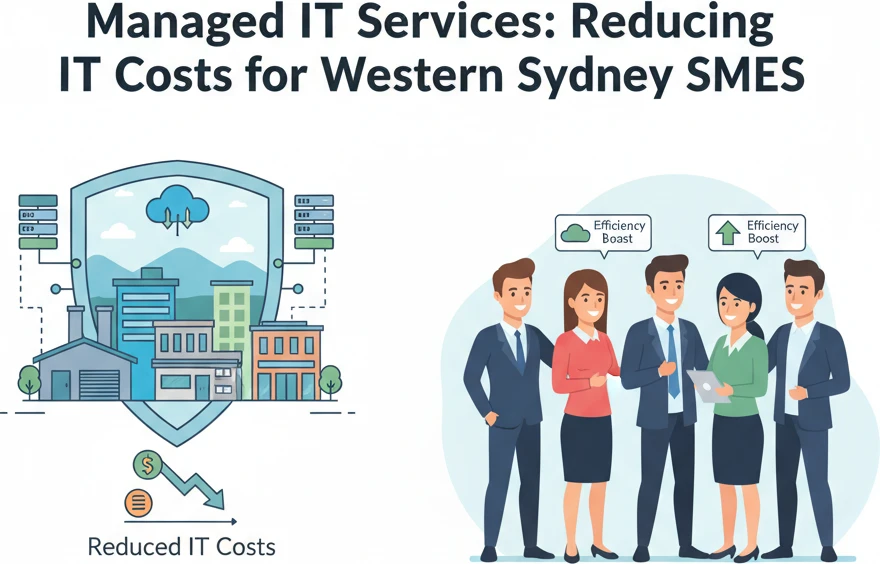
Managed IT services provide a comprehensive and proactive approach to managing an organisation’s IT infrastructure. Instead of relying on reactive, break-fix solutions, managed service providers (MSPs) offer ongoing support, monitoring, and maintenance for a fixed monthly fee. This includes services such as network monitoring, server management, data backup and recovery, cybersecurity protection, and help desk support. Essentially, an MSP acts as an outsourced IT department, handling all aspects of IT so that businesses can focus on their core operations. A solid Managed IT service provider will implement robust Disaster Recovery Planning: Protecting Western Sydney Businesses.
Proactive vs. Reactive IT Support
The key difference between managed IT services and traditional IT support lies in the approach: proactive versus reactive. Reactive IT support addresses issues as they arise, often resulting in downtime, lost productivity, and unexpected costs. In contrast, proactive IT support involves continuous monitoring, preventative maintenance, and strategic planning to identify and resolve potential problems before they impact the business. This proactive approach minimises downtime, improves system performance, and reduces the risk of costly disruptions. For example, an MSP might detect a failing hard drive on a server and replace it before it causes a complete system failure.
Key Components of a Managed IT Service Agreement
A managed IT service agreement (SLA) outlines the specific services provided by the MSP, as well as the service levels and performance metrics that the MSP is committed to meeting. Key components of an SLA typically include: Help desk support (response times, hours of availability), network monitoring and management, server maintenance, cybersecurity protection (firewall management, intrusion detection), data backup and recovery, software updates and patching, and regular reporting. The SLA should also clearly define the MSP’s responsibilities, the client’s responsibilities, and the process for resolving disputes. A well-defined SLA ensures that both parties are aligned on expectations and that the MSP is held accountable for delivering the agreed-upon services. Ensure your Western Sydney IT: Expert Support You Can Trust is aligned with your business goals.
The Top 5 Ways Managed IT Services Reduce Costs for SMEs in Western Sydney
Reduced Downtime and Increased Productivity
Downtime is a major cost driver for SMEs. Every minute of downtime translates to lost productivity, revenue, and customer satisfaction. Managed IT services minimise downtime through proactive monitoring, preventative maintenance, and rapid response to issues. By identifying and resolving potential problems before they cause disruptions, MSPs ensure that businesses can operate smoothly and efficiently. This increased uptime directly translates to higher productivity and improved profitability. Consider proactive IT Support for SMBs to Reduce Downtime.
Predictable Monthly IT Budgeting
One of the most significant benefits of managed IT services is predictable monthly budgeting. Instead of facing unpredictable and often substantial IT expenses, businesses pay a fixed monthly fee for comprehensive IT support and management. This allows for better financial planning and resource allocation. With a predictable IT budget, SMEs can avoid unexpected costs and invest more confidently in other areas of their business. This predictability also makes it easier to track IT spending and demonstrate the value of IT investments.
Enhanced Cybersecurity Protection
Cybersecurity threats are a growing concern for businesses of all sizes, and Western Sydney SMEs are particularly vulnerable. A single cyberattack can result in significant financial losses, reputational damage, and legal liabilities. Managed IT services provide enhanced cybersecurity protection through a range of measures, including firewall management, intrusion detection, vulnerability scanning, and security awareness training for employees. By proactively addressing cybersecurity risks, MSPs help businesses protect their data, systems, and reputation. Comprehensive Cybersecurity for Western Sydney: Beyond the Basics is no longer optional.
Improved Efficiency and Streamlined Operations
Managed IT services can improve efficiency and streamline operations by automating routine tasks, optimising IT infrastructure, and providing access to the latest technologies. MSPs can help businesses migrate to the cloud, implement collaboration tools, and streamline workflows, freeing up employees to focus on higher-value activities. This increased efficiency translates to reduced operational costs and improved business performance. For example, moving to cloud-based email and storage solutions can eliminate the need for on-premises servers and reduce IT maintenance costs.
Access to Expertise Without the Full-Time Salary
Hiring and retaining skilled IT professionals can be expensive and challenging for SMEs. Managed IT services provide access to a team of experienced IT experts without the overhead costs of hiring full-time employees. MSPs have a wide range of expertise across various IT disciplines, allowing them to address diverse IT challenges effectively. This access to expertise ensures that businesses have the support they need to leverage technology for growth and success. Furthermore, MSPs can provide ongoing training and support to help employees stay up-to-date on the latest technologies and best practices.
Real-World Examples: How Digitek IT Helped Local Businesses Save Money
Case Study 1: Professional Services Firm Reduced Downtime by 60%
A legal firm in Parramatta with 30 employees was experiencing frequent network outages, resulting in significant downtime and lost productivity. After implementing managed IT services from Digitek IT, including proactive monitoring and preventative maintenance, the firm reduced downtime by 60% within the first six months. This resulted in an estimated saving of $15,000 per year in lost productivity. The firm also benefited from improved network security and faster response times to IT issues.
Case Study 2: Medical Practice Improved Compliance and Security
A medical practice in Liverpool with 15 staff members was struggling to meet the requirements of the Australian Privacy Principles (APPs) and maintain patient data security. Digitek IT implemented a comprehensive cybersecurity solution, including firewall management, intrusion detection, and data encryption. We also provided ongoing cybersecurity training to staff. As a result, the practice achieved full compliance with the APPs and significantly reduced the risk of data breaches, avoiding potential fines and reputational damage. The cost savings from avoided data breach remediation were estimated at $20,000.
Case Study 3: Real Estate Agency Streamlined Operations with Cloud Solutions
A real estate agency in Penrith with 20 agents was relying on outdated on-premises servers for data storage and application hosting. Digitek IT migrated the agency’s infrastructure to the cloud, implementing Microsoft 365 and cloud-based CRM software. This streamlined operations, improved collaboration, and reduced IT maintenance costs. Agents were able to access data and applications from anywhere, increasing their productivity and responsiveness to clients. The agency reduced its IT spending by 25% annually.
Cybersecurity: A Critical Cost-Saving Aspect of Managed IT
The High Cost of Data Breaches for Australian Businesses
Data breaches can cripple Australian businesses, especially SMEs in Western Sydney. The financial impact extends far beyond immediate recovery costs. Consider expenses related to incident response, legal fees stemming from privacy breaches, potential regulatory fines, and perhaps most damaging, the long-term impact on a company’s reputation. According to the Australian Cyber Security Centre (ACSC), the average cost of a cybercrime for small businesses is significant, often reaching tens of thousands of dollars, while larger breaches can escalate into the millions. The ACSC publishes helpful guidance on understanding the cyber threat landscape. Moreover, downtime, lost productivity, and the cost of notifying affected customers all contribute to the overall financial burden. Ignoring cybersecurity is not a cost-saving measure; it’s a gamble with potentially devastating consequences.
How Managed IT Services Mitigate Cybersecurity Risks
Managed IT services offer a proactive approach to cybersecurity, significantly reducing the risk of costly data breaches. Unlike reactive “break-fix” solutions, managed IT providers implement a range of preventative measures, including regular security assessments, vulnerability scanning, and patch management. They also manage and monitor firewalls, intrusion detection systems, and antivirus software, ensuring these critical defenses are always up-to-date. Furthermore, managed IT providers can deliver crucial cybersecurity training for employees, teaching them how to identify phishing scams, avoid malware downloads, and practice safe online behavior. This holistic approach creates a multi-layered defense, minimizing the attack surface and protecting sensitive data. Partnering with a managed IT service for enhanced cybersecurity might allow your business to be eligible for more comprehensive cyber insurance coverage too.
Staying Compliant with Australian Data Privacy Regulations
Australian businesses are subject to strict data privacy regulations, including the Australian Privacy Principles (APPs) under the Privacy Act 1988. Failure to comply can result in substantial penalties and reputational damage. Managed IT services can help businesses navigate these complex requirements by implementing appropriate data security measures, such as encryption, access controls, and data loss prevention (DLP) technologies. They can also assist with developing and implementing privacy policies and procedures, ensuring compliance with the APPs. For businesses handling sensitive personal information, such as NDIS providers, adherence to these regulations is particularly critical, as explored in our article on NDIS IT support. Regular audits and compliance checks are essential to maintain compliance and avoid costly penalties.
Cloud Solutions and Managed IT: Optimising Your Infrastructure for Savings
Leveraging Cloud Services to Reduce Hardware Costs
Moving to the cloud can significantly reduce capital expenditure on hardware for Western Sydney SMEs. Instead of investing in expensive servers, storage devices, and networking equipment, businesses can leverage cloud-based infrastructure-as-a-service (IaaS) or platform-as-a-service (PaaS) offerings. This eliminates the need for upfront investments and ongoing maintenance costs, freeing up capital for other strategic initiatives. Cloud solutions also offer scalability, allowing businesses to easily adjust their resources based on demand. This prevents over-provisioning and ensures that businesses only pay for the resources they actually use. A managed IT provider can expertly guide a company through cloud migration, optimising the infrastructure for cost-effectiveness and performance.
Benefits of Cloud PCs for Remote Work in Western Sydney
Cloud PCs offer a secure and cost-effective solution for supporting remote work in Western Sydney. Instead of providing employees with physical desktop computers, businesses can deploy cloud-based virtual desktops that can be accessed from any device, anywhere with an internet connection. This eliminates the need to purchase and maintain expensive hardware, reducing capital expenditure and IT management overhead. Cloud PCs also enhance security by centralizing data and applications in the cloud, reducing the risk of data loss or theft. They offer a consistent user experience, regardless of the device used to access them, and simplify IT management by allowing administrators to remotely manage and update all desktops from a central location. This increased accessibility can dramatically improve productivity for remote teams.
Backup and Disaster Recovery for Business Continuity
Effective backup and disaster recovery (BDR) solutions are crucial for ensuring business continuity in the event of a hardware failure, cyberattack, or natural disaster. Managed IT services can implement and manage robust BDR solutions that automatically back up critical data and systems to secure cloud locations. These solutions enable businesses to quickly recover from disruptions, minimizing downtime and data loss. Regular testing of BDR plans is essential to ensure their effectiveness. Managed IT providers can conduct simulated disaster recovery scenarios to validate recovery procedures and identify potential weaknesses. A well-designed and tested BDR plan can provide peace of mind and protect a business from potentially catastrophic losses, as we discuss further in our article on disaster recovery planning.
Alternatives to Managed IT Services (and When to Choose Them)
In-House IT Department: Is It Right for Your Business?
An in-house IT department offers direct control and potentially deeper understanding of the business’s specific IT needs. However, it comes with significant overhead costs, including salaries, benefits, training, and equipment. The cost can be prohibitive for many Western Sydney SMEs. A fully staffed, competent IT department requires diverse skill sets, which can be challenging and expensive to acquire and retain. Furthermore, in-house IT staff may struggle to stay up-to-date with the latest technologies and security threats without ongoing training and professional development. An in-house team might be suitable for larger organisations with complex IT requirements and the resources to support a dedicated team. However, for most SMEs, the cost and complexity outweigh the benefits.
Break-Fix IT Support: The Reactive Approach
Break-fix IT support is a reactive approach where IT issues are addressed only when they arise. While it may seem cheaper upfront, it can lead to unpredictable costs and significant downtime. When a critical system fails, the business experiences lost productivity and potential revenue loss while waiting for a technician to arrive and resolve the issue. Break-fix support also lacks proactive monitoring and preventative maintenance, increasing the risk of recurring problems and security vulnerabilities. This model is only suitable for very small businesses with minimal IT infrastructure and a tolerance for frequent disruptions. This reactive method is the opposite of the proactive approach offered by managed services, which aims to reduce downtime.
DIY IT Management: The Risks and Limitations
Some business owners attempt to manage their IT themselves or delegate it to an employee with limited IT experience. While this may seem like a cost-saving measure, it often leads to significant problems. DIY IT management lacks the expertise and resources needed to properly configure, secure, and maintain IT infrastructure. This increases the risk of security breaches, data loss, and system failures. Furthermore, DIY IT management can consume valuable time and resources that could be better spent on core business activities. This approach is generally not recommended for any business that relies on technology to operate effectively. The time spent trying to manage IT issues could be much better spent growing the business.
Making the Switch: How to Choose the Right Managed IT Provider in Western Sydney
Key Questions to Ask Potential Providers
Choosing the right managed IT provider is a critical decision that can significantly impact a business’s productivity, security, and bottom line. It’s essential to ask potential providers the right questions to ensure they can meet your specific needs. Key questions include: What experience do you have supporting businesses in my industry? What proactive measures do you take to prevent IT issues? What is your response time for urgent issues? What security certifications and compliance standards do you adhere to? Do you offer 24/7 support? Can you provide references from other clients in Western Sydney? Understanding the provider’s capabilities and service offerings is crucial for making an informed decision. Are you looking for someone local? Then consider an expert in Western Sydney IT.
Understanding Service Level Agreements (SLAs)
A Service Level Agreement (SLA) is a contract between a business and a managed IT provider that defines the services to be provided, the performance standards, and the responsibilities of each party. It’s crucial to carefully review and understand the SLA before signing any agreement. Key elements of an SLA include: Response time guarantees for different types of issues. Uptime guarantees for critical systems. Escalation procedures for unresolved issues. Service availability windows. Reporting and monitoring requirements. Penalties for failing to meet service level targets. A well-defined SLA provides clarity and accountability, ensuring that the managed IT provider is committed to delivering the agreed-upon services and performance levels.
Checking References and Reviews
Before making a final decision, it’s essential to check references and reviews from other businesses that have worked with the managed IT provider. Contacting references can provide valuable insights into the provider’s service quality, responsiveness, and reliability. Online reviews on platforms such as Google, Facebook, and industry-specific review sites can also offer valuable feedback from other customers. Look for patterns in the reviews to identify potential strengths and weaknesses of the provider. Pay attention to both positive and negative feedback, and consider how the provider responds to negative reviews. A reputable managed IT provider should be transparent and willing to provide references and address any concerns.
Calculate Your Potential Savings: A Cost-Benefit Analysis of Managed IT
Factors to Consider When Estimating IT Costs
Estimating your current IT costs accurately is the first step to understanding the potential savings of managed IT services. Don’t just consider the obvious expenses. Include the salaries of any in-house IT staff, or the hourly rates of external contractors. Factor in the cost of hardware and software licenses, as well as the time spent managing these assets. Hidden costs often include downtime due to IT issues, which can significantly impact productivity and revenue. Consider the costs associated with data breaches, regulatory non-compliance, and the time employees spend troubleshooting IT problems themselves. Finally, include the cost of ongoing training and professional development for your IT personnel. A complete assessment will provide a solid foundation for comparison.
Using Online Calculators to Assess ROI
While generic online ROI calculators can provide a starting point, a more tailored approach is recommended for accuracy. These calculators typically ask for inputs like current IT spending, number of employees, and estimated downtime. However, they often fail to account for the unique needs and complexities of your specific business. Consider using these tools as a preliminary assessment, but always supplement the results with a detailed consultation with a managed IT service provider. For example, a medical practice in Parramatta will have different IT needs and compliance requirements than a real estate agency in Penrith. A detailed IT audit, like the one offered by Digitek IT, will reveal a more accurate picture of your current IT infrastructure, vulnerabilities, and potential cost savings.
Beyond Cost Savings: The Intangible Benefits of Managed IT
The benefits of managed IT services extend far beyond simple cost reduction. Improved security is a major advantage, with proactive monitoring and threat detection helping to prevent costly data breaches and downtime. Businesses also experience increased productivity as a result of fewer IT issues and faster resolution times. Managed IT services can also ensure compliance with relevant regulations, such as the Australian Privacy Principles (APPs) or industry-specific standards. Consider also the value of reduced stress and improved focus. When business owners and employees are not constantly dealing with IT problems, they can focus on core business activities and strategic growth. For instance, proactive cybersecurity measures prevent costly disruptions and protect reputation, while reliable backups ensure business continuity.
Digitek IT: Your Trusted Partner for Cost-Effective IT Solutions
Our Commitment to Supporting Western Sydney SMEs
Digitek IT is dedicated to providing cost-effective and reliable IT solutions to small and medium-sized businesses in Western Sydney. We understand the unique challenges faced by businesses in this region, from managing rapid growth to navigating complex compliance requirements. Our team of experienced IT professionals is committed to delivering personalised service and proactive support to help your business thrive. We believe that technology should be an enabler, not a burden, and we work closely with our clients to develop IT strategies that align with their business goals. We pride ourselves on being a local partner that understands the local landscape. We believe that building long-term relationships is the foundation of our business.
Our Range of Managed IT Services
We offer a comprehensive suite of managed IT services designed to address the diverse needs of Western Sydney businesses. This includes proactive monitoring and maintenance, help desk support, cybersecurity solutions, cloud services, backup and disaster recovery, and IT consulting. Our cybersecurity services are designed to protect your business from evolving threats, while our cloud solutions can help you improve efficiency and reduce costs. Our backup and disaster recovery services ensure business continuity in the event of an unforeseen event. For example, our proactive monitoring can detect potential hardware failures before they cause downtime, saving you time and money. More details on our commitment to disaster recovery can be found through a link to the Office of the Australian Information Commissioner.
Contact Us for a Free Consultation and IT Audit
Ready to discover how managed IT services can reduce your IT costs and improve your business performance? Contact Digitek IT today for a free consultation and IT audit. Our team will assess your current IT infrastructure, identify areas for improvement, and provide you with a customized IT solution tailored to your specific needs and budget. We will also provide you with a clear and transparent cost-benefit analysis, so you can see exactly how much you can save. We can assist with achieving compliance for particular sectors, such as NDIS providers. Don’t let IT problems hold your business back. Let Digitek IT be your trusted partner for cost-effective and reliable IT solutions.
By carefully evaluating your IT needs, considering all cost factors, and partnering with a reliable managed IT service provider like Digitek IT, Western Sydney SMEs can unlock significant cost savings and improve overall business performance. Don’t just react to IT problems; proactively manage them. You can find more information regarding Australia’s Privacy Act here.