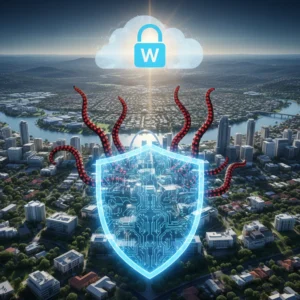
In today’s digital landscape, ransomware poses a significant threat to businesses of all sizes, but especially to Small and Medium-sized Enterprises (SMEs) in Western Sydney. These businesses are often seen as easier targets than larger corporations due to potentially limited IT resources and cybersecurity expertise. Are you confident your business is prepared to defend against a crippling ransomware attack?
This guide explores the realities of ransomware, helps you assess your risk, and outlines actionable steps you can take to protect your valuable data and ensure business continuity.
Could Ransomware Cripple Your Western Sydney Business?
Real-world examples of Western Sydney businesses impacted by ransomware in 2025/2026
Unfortunately, ransomware attacks are not theoretical. Throughout 2025 and into 2026, numerous Western Sydney businesses across various sectors experienced the harsh realities of ransomware. These attacks resulted in significant financial losses, operational disruptions, and reputational damage. We have seen everything from local medical practices unable to access patient records to construction firms halted due to encrypted project files. These incidents highlight the urgent need for robust cybersecurity measures, even for businesses that believe they are “too small” to be targeted. Consider this example:
Example: A small real estate agency in Parramatta had its network completely encrypted by the LockBit ransomware variant in early 2026. They lost access to critical customer data, property listings, and financial records. The agency was forced to shut down for five days, incurring significant costs including lost revenue and emergency IT support fees. The ransom demand was $50,000, but ultimately, they recovered from backups after engaging a cybersecurity firm, but the total cost of the incident was estimated at $35,000 including downtime and recovery efforts.
Why SMEs are particularly vulnerable to ransomware attacks
SMEs are often targeted because they represent a sweet spot for cybercriminals: valuable data and a higher probability of a successful attack due to less mature security infrastructure. Many SMEs operate with limited IT budgets, making it difficult to invest in comprehensive cybersecurity solutions. They may lack dedicated IT staff, relying on external providers or internal employees with limited security expertise. This creates vulnerabilities that attackers can exploit. Additionally, SMEs are less likely to have robust incident response plans in place, making it harder to recover quickly from an attack. They also might be less likely to have adequate cloud backup and disaster recovery plans, making recovery even more difficult.
The growing sophistication of ransomware threats
Ransomware attacks are becoming increasingly sophisticated. Attackers are constantly evolving their tactics, using more advanced encryption techniques, and employing more sophisticated phishing campaigns. Double extortion, where attackers not only encrypt data but also threaten to release it publicly, is becoming increasingly common. Ransomware-as-a-Service (RaaS) models have also lowered the barrier to entry for cybercriminals, making it easier for individuals with limited technical skills to launch attacks. These factors combine to create a constantly evolving threat landscape that requires ongoing vigilance and proactive security measures. Staying informed about current threats is critical. Reputable sources like the Australian Cyber Security Centre (ACSC) provide valuable threat intelligence and guidance: Australian Cyber Security Centre. Further, staying abreast of security trends and threats can be achieved by frequently checking resources such as CISA Alerts.
What is Ransomware and How Does it Infect Your Systems?
Explaining ransomware in simple terms: what it is and how it works
Ransomware is a type of malicious software that encrypts your computer files, rendering them inaccessible. Cybercriminals then demand a ransom payment in exchange for the decryption key needed to restore access to your data. Think of it like a digital hostage situation. The attackers break into your systems, lock up your valuable data, and demand payment for its safe return. Once ransomware infects a system, it typically spreads quickly across the network, encrypting as many files as possible to maximize the impact and increase the likelihood of payment. The ransom demands can range from a few hundred dollars to hundreds of thousands of dollars, often payable in cryptocurrency.
Common infection vectors: phishing emails, malicious websites, and unpatched software
Ransomware can infect your systems through various means, but some of the most common infection vectors include:
* Phishing emails: These emails often masquerade as legitimate communications from trusted sources, such as banks, suppliers, or even colleagues. They typically contain malicious attachments or links that, when clicked, download and install the ransomware.
* Malicious websites: Visiting compromised or malicious websites can also lead to ransomware infections. These websites may contain exploit kits that automatically download and install ransomware onto your computer without your knowledge.
* Unpatched software: Software vulnerabilities are a major entry point for ransomware. Attackers actively seek out and exploit known vulnerabilities in outdated software and operating systems. Regularly patching your software is crucial to close these security gaps.
Keeping your software updated, including your operating systems, web browsers, and applications, is one of the most effective ways to prevent ransomware infections.
The devastating impact of data encryption on business operations
The impact of data encryption on business operations can be devastating. When critical files are encrypted, businesses may lose access to essential data, including customer records, financial information, and operational documents. This can disrupt business processes, prevent them from fulfilling orders, and halt productivity. Downtime can result in significant financial losses due to lost revenue, reputational damage, and recovery costs. Furthermore, the decryption process can be time-consuming and complex, even if a ransom is paid. There is also no guarantee that paying the ransom will actually result in the recovery of your data, as some cybercriminals may simply take the money and run. Investing in proactive cybersecurity measures and robust disaster recovery planning is far more cost-effective than dealing with the aftermath of a ransomware attack. You can learn more about the impact of attacks on organizations from IBM’s Cost of a Data Breach Report.
Is Your Business a Target? Assessing Your Ransomware Risk
Identifying common vulnerabilities in small to medium businesses IT setups
Many SMEs share common IT vulnerabilities that make them attractive targets for ransomware attacks. These include:
* Weak passwords: Using easily guessable passwords or reusing the same password across multiple accounts significantly increases the risk of compromise.
* Lack of multi-factor authentication (MFA): Failing to implement MFA on critical accounts makes it easier for attackers to gain unauthorized access, even if they have obtained a password.
* Outdated software and operating systems: Unpatched vulnerabilities in outdated software provide easy entry points for attackers.
* Inadequate firewall protection: A poorly configured or outdated firewall can fail to block malicious traffic.
* Lack of employee cybersecurity awareness training: Untrained employees are more likely to fall for phishing scams or other social engineering attacks.
* Insufficient data backups: Without reliable and regularly tested backups, recovering from a ransomware attack can be extremely difficult or impossible.
Checklist: Key questions to assess your current security posture
To assess your current ransomware risk, ask yourself the following questions:
* Do we have a comprehensive cybersecurity policy in place?
* Are our employees trained to recognize and avoid phishing attacks?
* Do we use multi-factor authentication (MFA) on all critical accounts?
* Are our software and operating systems regularly patched and updated?
* Do we have a robust firewall and intrusion detection system in place?
* Do we regularly back up our data, and are our backups stored securely offsite?
* Have we tested our backup and recovery procedures to ensure they are effective?
* Do we have an incident response plan in place to deal with a ransomware attack?
* Have we conducted a cybersecurity risk assessment recently?
If you answered “no” to any of these questions, your business may be at increased risk of a ransomware attack. Using a resource like a Cybersecurity Checklist for Western Sydney Businesses can provide more tailored insights.
Understanding the value of your data to cybercriminals
Cybercriminals target businesses whose data holds value, either for resale on the dark web or for leveraging in extortion schemes. This includes Personally Identifiable Information (PII) of customers and employees, financial data, intellectual property, trade secrets, and sensitive business documents. Even seemingly insignificant data can be valuable in the wrong hands. For example, access to a company’s email system can be used to launch further phishing attacks or to intercept financial transactions. The more valuable your data is, the more likely you are to become a target. Consider also that some cybercriminals don’t discriminate – they simply target as many systems as possible, hoping to find a payout somewhere.
Proactive Steps to Protect Your Business from Ransomware
Implementing multi-factor authentication (MFA) across all accounts
Multi-factor authentication (MFA) adds an extra layer of security to your accounts by requiring users to provide two or more verification factors before granting access. This makes it much harder for attackers to gain unauthorized access, even if they have stolen a password. Common MFA methods include one-time codes sent to your mobile phone, biometric authentication (such as fingerprint scanning), and hardware security keys. Implementing MFA across all critical accounts, including email, banking, cloud services, and network access, is one of the most effective ways to protect your business from ransomware. It significantly reduces the risk of account compromise and prevents attackers from gaining access to your systems, even if they have obtained a valid username and password. It’s arguably the single most important step you can take to improve your security posture. Using password managers can help your team manage stronger passwords alongside MFA.
Regularly patching software and operating systems
Regularly patching software and operating systems is crucial to address known vulnerabilities that attackers can exploit. Software vendors routinely release security updates to fix bugs and vulnerabilities that could be used to compromise systems. Failing to install these updates in a timely manner leaves your business exposed to known threats. Automate the patching process where possible to ensure that updates are installed promptly. Establish a patching schedule and prioritize critical updates that address known vulnerabilities. Regularly scan your network for missing patches and ensure that all systems are up to date. Consider using a managed service provider to handle patching and updates, ensuring consistent and timely protection against evolving threats. A Managed IT provider can automate this critical aspect of cybersecurity.
Employee cybersecurity awareness training: identifying and avoiding phishing attacks
Employees are often the weakest link in the cybersecurity chain. Attackers frequently use phishing emails and other social engineering tactics to trick employees into revealing sensitive information or installing malicious software. Employee cybersecurity awareness training is essential to educate employees about these threats and equip them with the skills to recognize and avoid them. Training should cover topics such as:
* Identifying phishing emails and other social engineering attacks
* Creating strong passwords and protecting their accounts
* Avoiding suspicious websites and downloads
* Reporting security incidents
* Proper data handling procedures
Regular training and ongoing reinforcement are crucial to maintain a high level of cybersecurity awareness among employees. Conduct regular phishing simulations to test employee awareness and identify areas for improvement. Make cybersecurity a part of your company culture and encourage employees to be vigilant and proactive in protecting your business from cyber threats.
The Importance of Data Backup and Disaster Recovery in a Ransomware Attack
Ransomware attacks are becoming increasingly sophisticated, and the potential consequences for Western Sydney businesses are severe. The ability to quickly restore operations after an attack hinges on a robust data backup and disaster recovery plan. Without it, a ransomware attack can cripple your business, leading to significant financial losses, reputational damage, and even closure. A well-structured backup strategy is your last line of defence, providing a means to recover your data without having to pay a ransom.
The 3-2-1 backup rule: ensuring data redundancy and offsite storage
The 3-2-1 backup rule is a widely accepted best practice for data protection. It dictates that you should have at least three copies of your data, on two different storage media, with one copy stored offsite. This ensures that if one backup fails or is compromised (for instance, by ransomware spreading to local backups), you still have other recovery options available. For example, you might keep your primary data on your server, have a local backup on a network-attached storage (NAS) device, and a third backup in a secure cloud backup service. The offsite component is critical; if the ransomware encrypts all your on-premises systems, including local backups, an offsite copy remains safe and accessible. Using a cloud backup service also simplifies management and scaling as your business grows. Neglecting the 3-2-1 rule leaves you vulnerable to single points of failure that ransomware can easily exploit.
Testing your backup and recovery plan regularly
Having backups is only half the battle. The true test of your disaster recovery plan is how effectively and quickly you can restore your data. Regular testing is paramount. This involves simulating a ransomware attack scenario and practicing the recovery process to identify any weaknesses or bottlenecks. For instance, you might restore a subset of your data to a test environment to verify its integrity and the speed of the restoration process. Consider timing how long it takes to recover critical systems and applications. Document the entire process, including any errors encountered and the steps taken to resolve them. Based on the test results, refine your backup and recovery procedures. Automated testing tools can also streamline this process, providing regular reports on backup status and recovery readiness. Failing to test your backups regularly is akin to having insurance without knowing if it will actually pay out when you need it most.
How a robust backup can minimise downtime and data loss during an attack
A well-implemented backup and disaster recovery plan significantly minimises downtime and data loss during a ransomware attack. By quickly restoring your systems from a clean backup, you can avoid prolonged business interruptions. For example, if a ransomware attack encrypts your primary servers, you can restore your data and applications to a new server or a virtual machine from your most recent backup. This can reduce downtime from days or weeks to just a few hours. Cloud-based disaster recovery solutions can further accelerate this process by providing instant access to your data and applications in a secure cloud environment. Data loss can also be minimised by implementing frequent backups and versioning, which allows you to restore to a point in time before the infection occurred. Without a reliable backup system, your business is at the mercy of the attackers, potentially facing permanent data loss and extensive downtime. A solid plan, like those discussed in our article on business continuity and disaster recovery, is key.
Building a Ransomware Incident Response Plan
A ransomware incident response plan is a documented set of procedures to follow when a ransomware attack is detected. This plan should outline roles and responsibilities, communication protocols, and technical steps to contain and eradicate the threat. It is a proactive measure that helps businesses react swiftly and effectively, minimizing damage and downtime. Without a plan, panic and disorganisation can exacerbate the impact of the attack.
Key steps to take if your business is hit by ransomware
The first step is detection and identification. Implement monitoring tools that alert you to suspicious activity, such as unusual file encryption or network traffic. Upon detecting a potential ransomware attack, immediately isolate the infected systems from the network to prevent further spread. Disconnect network cables or disable Wi-Fi connections. Next, activate your incident response plan and notify the designated team members. Document every step taken, including the time of the incident, affected systems, and actions taken. Do not attempt to remove the ransomware yourself unless you have the necessary expertise, as this could potentially worsen the situation. Resist the urge to pay the ransom. There is no guarantee that the attackers will provide the decryption key, and paying the ransom can encourage future attacks. Focus instead on restoring your systems from backups. Finally, conduct a thorough investigation to determine the source of the attack and implement measures to prevent future incidents.
Who to contact: internal IT team, external cybersecurity experts, law enforcement
Your incident response plan should clearly define who to contact in the event of a ransomware attack. This typically includes your internal IT team, who can assess the technical aspects of the incident and begin the recovery process. However, if your internal team lacks the necessary expertise, you should engage external cybersecurity experts who specialise in ransomware response. These experts can provide forensic analysis, malware removal, and assistance with data recovery. It’s also wise to consider contacting law enforcement agencies, such as the Australian Cyber Security Centre (ACSC), to report the incident. While law enforcement may not be able to recover your data, they can investigate the attack and potentially identify the perpetrators. Furthermore, consider contacting your insurance provider, as your cyber insurance policy may cover the costs associated with ransomware attacks, such as data recovery, legal fees, and business interruption losses. Having pre-established relationships with these parties can expedite the response process during a crisis.
Containing the spread of the infection and minimising further damage
Containing the spread of the ransomware infection is crucial to minimise further damage. As mentioned earlier, the first step is to isolate the infected systems from the network. This prevents the ransomware from spreading to other devices and encrypting more data. Once the infected systems are isolated, focus on identifying the source of the infection. This could be a compromised email attachment, a malicious website, or a vulnerable application. Implement network segmentation to limit the lateral movement of the ransomware within your network. This involves dividing your network into smaller, isolated segments, so that if one segment is compromised, the ransomware cannot easily spread to other segments. Consider using intrusion detection and prevention systems to monitor network traffic for suspicious activity and block malicious connections. Finally, educate your employees about ransomware prevention techniques, such as avoiding suspicious email attachments and websites, and using strong passwords. Regular cybersecurity awareness training can significantly reduce the risk of human error leading to a ransomware infection. Further steps may be outlined in a cybersecurity checklist.
Alternatives to Complete DIY Ransomware Protection (and When to Consider Them)
While some businesses opt for a do-it-yourself (DIY) approach to ransomware protection, it’s essential to understand the limitations and potential risks involved. Protecting against ransomware requires a comprehensive and multi-layered approach, including proactive security measures, ongoing monitoring, and rapid incident response capabilities. A purely DIY approach may lack the depth and expertise needed to effectively defend against today’s sophisticated threats. This is especially true for small to medium-sized businesses (SMBs) in Western Sydney that may not have dedicated IT security personnel.
Comparing managed IT services, in-house IT teams, and hybrid solutions
Managed IT services offer a comprehensive, outsourced solution for ransomware protection. They provide proactive security measures, such as vulnerability assessments, security patching, and threat monitoring, as well as incident response services in the event of an attack. An in-house IT team provides direct control and customisation but requires significant investment in personnel, training, and technology. A hybrid solution combines the strengths of both approaches, with an in-house team handling day-to-day IT operations and a managed IT service provider offering specialised cybersecurity expertise and support. The decision depends on factors like budget, technical expertise, and risk tolerance. For example, a medical practice in Parramatta might opt for managed IT services to ensure compliance with strict data privacy regulations, while a small accounting firm could potentially manage basic security measures in-house with occasional external support. However, relying solely on an in-house team without specialised cybersecurity knowledge can leave your business vulnerable.
The cost-benefit analysis of outsourcing cybersecurity expertise
Outsourcing cybersecurity expertise through managed IT services can provide significant cost benefits compared to building and maintaining an in-house security team. The costs of hiring, training, and retaining skilled cybersecurity professionals can be substantial, especially given the current shortage of cybersecurity talent. Managed IT services offer access to a team of experts with diverse skills and experience, at a predictable monthly cost. They also provide access to advanced security technologies and tools that may be too expensive for individual businesses to acquire. For instance, a small real estate agency in Penrith might find it more cost-effective to outsource their cybersecurity to a managed IT provider than to hire a full-time security analyst. Consider the potential costs of a ransomware attack, including downtime, data loss, legal fees, and reputational damage, when evaluating the cost-benefit of outsourcing cybersecurity. A thorough risk assessment can help you determine the level of protection your business needs and the most cost-effective way to achieve it. Failure to invest adequately in cybersecurity can result in far greater financial losses in the event of a successful attack, which is discussed in our article on cybersecurity costs.
When DIY security might be enough (and when it definitely isn’t)
A DIY approach to ransomware protection might be sufficient for very small businesses with limited IT infrastructure and low-risk data. For example, a sole trader running a simple online business might be able to rely on basic security measures, such as antivirus software, firewalls, and regular software updates. However, as your business grows and your IT infrastructure becomes more complex, a DIY approach is no longer adequate. If you handle sensitive customer data, rely on critical business applications, or have a distributed workforce, you need a more comprehensive and proactive security strategy. Industries like healthcare, finance, and legal services, which are subject to strict data privacy regulations, should definitely not rely on a DIY approach. The potential consequences of a data breach or ransomware attack in these industries are too severe. Furthermore, even if you have some technical expertise, keeping up with the ever-evolving threat landscape requires constant vigilance and ongoing training, which can be difficult to achieve without dedicated security resources. If you are unsure whether your current security measures are sufficient, it’s best to consult with a cybersecurity expert for an assessment.
Digitek IT: Your Western Sydney Partner in Ransomware Protection
Digitek IT is a managed IT services provider based in Western Sydney, dedicated to helping Australian small to medium businesses protect themselves from the growing threat of ransomware. We understand the unique challenges that businesses in the region face, and we offer tailored solutions to meet their specific needs. Our proactive approach to security, combined with our rapid incident response capabilities, ensures that our clients are well-protected against ransomware attacks.
How our managed IT services can provide comprehensive ransomware protection
Our managed IT services offer a multi-layered approach to ransomware protection. We start with a thorough assessment of your current IT infrastructure to identify any vulnerabilities. We then implement proactive security measures, such as endpoint detection and response (EDR) solutions, firewalls, intrusion detection and prevention systems, and regular security patching. We also provide ongoing monitoring of your systems to detect suspicious activity and respond quickly to potential threats. Our backup and disaster recovery solutions ensure that you can quickly restore your data in the event of a ransomware attack. We also provide cybersecurity awareness training to your employees to help them avoid phishing scams and other social engineering attacks. Our services are designed to provide comprehensive protection against ransomware, from prevention to detection to recovery. We focus on proactive steps, described further on our page about managed IT’s proactive support.
Our approach to proactive security, monitoring, and incident response
Proactive security is at the heart of our approach to ransomware protection. We believe that the best way to defend against ransomware is to prevent it from happening in the first place. This involves implementing a range of security measures to reduce your attack surface and prevent malware from entering your network. We also provide 24/7 monitoring of your systems to detect suspicious activity and respond quickly to potential threats. Our security operations centre (SOC) is staffed by experienced security analysts who are constantly monitoring your network for signs of compromise. In the event of a ransomware attack, our incident response team will work quickly to contain the spread of the infection, remove the malware, and restore your data from backups. We also provide forensic analysis to determine the cause of the attack and implement measures to prevent future incidents. We are committed to providing a rapid and effective response to ransomware attacks, minimizing downtime and data loss for our clients.
Case studies: helping Western Sydney businesses avoid and recover from ransomware attacks
Example: A legal firm in Parramatta was targeted by a sophisticated ransomware attack that encrypted their client files and threatened to release sensitive information online. The firm was a Digitek IT client, and our team was able to quickly isolate the infected systems, remove the ransomware, and restore their data from backups. The entire recovery process took less than 24 hours, minimizing downtime and preventing any data loss. The firm was able to continue operating without interruption, and their clients’ data remained secure. A post-incident analysis revealed that the attack was initiated through a phishing email, and we implemented additional security measures to prevent similar incidents in the future.
Example: A manufacturing company in Smithfield experienced a ransomware attack that disrupted their production line and caused significant financial losses. Fortunately, the company had implemented our managed IT services, including our backup and disaster recovery solution. Our team was able to quickly restore their systems from backups, minimizing downtime and preventing permanent data loss. The company estimated that they saved over $100,000 by avoiding a prolonged shutdown and data recovery costs. This highlights the importance of investing in proactive security measures and having a robust backup and disaster recovery plan in place.
Understanding Australian Regulations and Data Breach Notification Requirements
Navigating the Notifiable Data Breaches (NDB) scheme under the Privacy Act
Australian businesses, including those in Western Sydney, operate under the purview of the Privacy Act 1988 and its associated Notifiable Data Breaches (NDB) scheme. This legislation mandates that organisations take reasonable steps to protect personal information they hold from misuse, interference, loss, and unauthorised access or disclosure. A ransomware attack that compromises personal information triggers specific obligations under the NDB scheme. The OAIC (Office of the Australian Information Commissioner) provides detailed guidance on these obligations.
Determining whether a data breach is notifiable involves assessing the risk of serious harm to individuals whose personal information has been compromised. This assessment must consider the type of data involved (e.g., financial details, health records), the sensitivity of the information, the security measures that were in place, and the likelihood that the data will be used for malicious purposes. The OAIC’s guidance specifies that a breach is notifiable if a reasonable person would conclude that the breach is likely to result in serious harm. Ransomware attacks, particularly those involving data exfiltration, often meet this threshold.
Your obligations in the event of a ransomware attack that compromises personal information
Upon suspecting a data breach involving personal information due to a ransomware attack, your organisation has a duty to take immediate steps. This includes containing the breach to prevent further data compromise, conducting a thorough assessment to determine the scope of the breach and the risk of serious harm, and notifying the OAIC and affected individuals if the breach is deemed notifiable. Notification should include a description of the breach, the kind(s) of information concerned, and recommendations about the steps individuals should take in response. Time is of the essence; the Privacy Act stipulates a maximum of 30 days to assess and notify a notifiable breach.
Failing to comply with these obligations can lead to significant penalties. Beyond the direct financial costs of ransomware recovery, legal and regulatory repercussions can severely impact your business. Remember to review and update your incident response plan regularly to ensure it aligns with current cybersecurity best practices and regulatory requirements. This includes simulating ransomware attacks to test your team’s readiness and identify areas for improvement. Moreover, consider a robust cloud backup solution as a vital component of your disaster recovery strategy.
Avoiding hefty fines and reputational damage by complying with data protection laws
Non-compliance with Australian data protection laws, specifically the NDB scheme, can lead to substantial financial penalties and significant reputational damage. The maximum penalties for serious or repeated privacy breaches can be substantial, potentially reaching millions of dollars. Beyond the monetary costs, the loss of customer trust and the erosion of brand reputation can have long-lasting consequences for your business. Moreover, directors and officers can be held personally liable for breaches in certain circumstances, underscoring the importance of proactive cybersecurity measures and robust data protection policies.
Compliance involves more than just reacting to a breach; it requires a proactive approach to data protection. This includes implementing appropriate security measures, such as firewalls, intrusion detection systems, and endpoint protection, as well as regularly assessing and mitigating cybersecurity risks. Employee training is crucial to ensure staff understand their responsibilities in protecting personal information and can recognise and respond to potential threats. Regularly auditing your IT systems and data protection practices can help identify vulnerabilities and ensure ongoing compliance. For instance, a real estate agency failing to secure client data after repeated warnings, ultimately facing a ransomware attack and subsequent penalties, demonstrates the tangible costs of neglecting cybersecurity.
Stop Ransomware Before It Stops You: Take Action Today
Call to action: Request a free cybersecurity assessment from Digitek IT
Don’t wait until it’s too late. Digitek IT offers a free, comprehensive cybersecurity assessment for businesses in Western Sydney. Our experts will evaluate your current security posture, identify vulnerabilities, and provide actionable recommendations to protect your business from ransomware and other cyber threats. Understanding your specific risks is the first step toward building a robust defense. This assessment can help you understand where you stand and how to improve your defenses. Ignoring vulnerabilities can have significant consequences, as highlighted by the increasing number of ransomware attacks targeting Australian businesses.
Download our free ransomware prevention checklist
Take immediate steps to improve your ransomware defenses by downloading our free ransomware prevention checklist. This practical guide outlines essential security measures you can implement today to reduce your risk of attack. The checklist covers key areas such as employee training, password management, software updates, and backup strategies. This resource provides a structured approach to bolstering your cybersecurity posture. Implementing these recommendations can significantly reduce your vulnerability to ransomware attacks. Many businesses fall victim to ransomware simply because they neglect basic security measures. You can also review our Cybersecurity Checklist for Western Sydney Businesses for more ways to improve your security.
Sign up for our cybersecurity newsletter for tips and updates
Stay informed about the latest ransomware threats and cybersecurity best practices by signing up for our free cybersecurity newsletter. You’ll receive regular updates on emerging threats, actionable tips to improve your security, and insights from our team of cybersecurity experts. Knowledge is power, and staying informed is essential in the fight against ransomware. Our newsletter will help you stay ahead of the curve and protect your business from evolving cyber threats. Many ransomware attacks exploit newly discovered vulnerabilities, so staying updated is crucial. Subscribe today and empower yourself with the knowledge you need to keep your business safe, and don’t hesitate to consider managed IT services to maintain that ongoing security and proactive support.
By understanding Australian regulations, taking proactive steps to prevent ransomware attacks, and staying informed about the latest threats, businesses in Western Sydney can significantly reduce their risk and protect their valuable data and reputation.